
Introduction
Mobile phones have become an essential part of everyday life. People use smartphones to communicate, browse websites, access social media, make online payments, manage emails, store personal photos, and use different digital services. Although smartphones make daily activities easier, they also collect and process a significant amount of personal information. This makes mobile data privacy an important concern for every smartphone user.
Following effective Mobile Data Privacy Tips can help you understand how your personal information is collected, shared, stored, and protected. Many mobile applications request access to contacts, location, camera, microphone, photos, and other sensitive information. Some permissions are necessary for an app to work properly, while others may not be required for its main features.
Understanding your privacy settings and making informed decisions can reduce unnecessary data sharing. You do not need advanced technical knowledge to improve your mobile data privacy. Simple habits, such as reviewing app permissions, installing updates, using strong passwords, and avoiding suspicious applications, can make a meaningful difference.
This guide explains practical Mobile Data Privacy Tips for Android and iPhone users. It covers app permissions, location privacy, mobile browsing, public Wi-Fi, account security, cloud storage, social media, and other important areas. Whether you are a beginner or an experienced smartphone user, these suggestions can help you manage your personal information more carefully.
What Is Mobile Data Privacy?
Mobile data privacy refers to the protection and responsible handling of information stored on or accessed through a smartphone. This information may include personal details, messages, photographs, browsing activity, contacts, location information, financial details, and account credentials.
Whenever you install an application, visit a website, or use an online service, certain information may be collected. The type and amount of information depend on the service, its privacy settings, and the permissions you provide.
Mobile data privacy focuses on maintaining control over this information. It helps users understand what data applications can access, why information is collected, and how it may be shared with other services.
For example, a navigation application may need location access to provide directions. However, a simple calculator generally does not need access to your location or contacts. Understanding these differences is an important part of protecting personal information.
Why Are Mobile Data Privacy Tips Important?
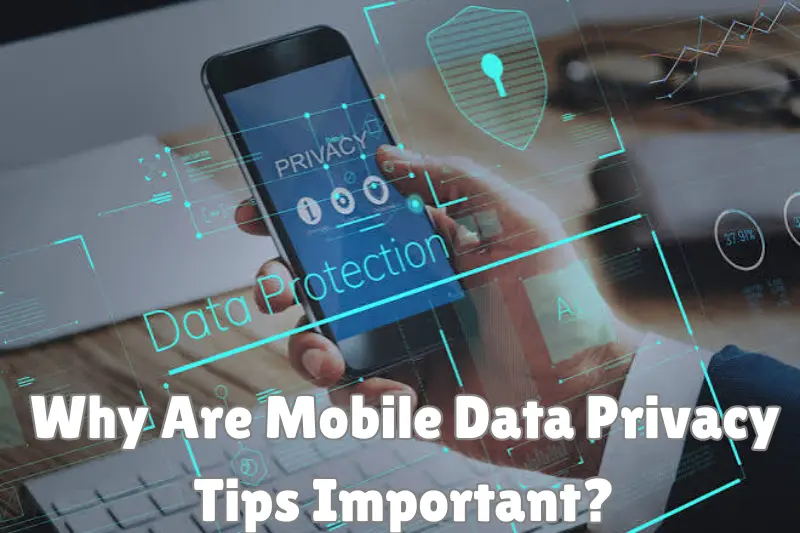
Smartphones contain information that can reveal many details about a person’s daily activities. A device may store personal conversations, financial applications, saved passwords, photographs, contact information, and location history.
If this information is exposed through weak security practices, unauthorized account access, or unnecessary data sharing, users may experience privacy problems.
Here are some reasons why following Mobile Data Privacy Tips matters.
1. Protect Personal Information
Your smartphone may contain your name, email address, phone number, photographs, documents, and other private details. Privacy settings help you control which applications can access this information.
Limiting unnecessary permissions reduces the amount of personal data shared with applications.
2. Reduce Unnecessary Data Collection
Some applications request more information than they need to provide their main features. Reviewing permissions helps you identify requests that do not make sense.
You can deny optional permissions when they are not necessary for the application to work.
3. Improve Account Security
Mobile phones are commonly connected to email accounts, social media profiles, shopping platforms, and financial services. Protecting these accounts is an important part of mobile privacy.
Strong passwords and two-factor authentication can help prevent unauthorized access.
4. Protect Browsing Activity
Web browsers may store browsing history, cookies, saved login information, and website preferences. Managing these settings can help reduce unnecessary tracking and protect sensitive browsing information.
5. Maintain Better Control Over Digital Identity
Your digital identity includes information associated with your online accounts and activities. Managing privacy settings carefully helps you decide what information is publicly visible and what should remain private.
15 Practical Mobile Data Privacy Tips
Improving smartphone privacy does not require complicated software or expensive tools. The following Mobile Data Privacy Tips focus on simple actions that users can apply to their everyday mobile activities.
1. Review App Permissions Regularly
App permissions determine which parts of your smartphone an application can access. These permissions may include location, contacts, camera, microphone, photos, files, and notifications.
When installing an application, many users accept every permission without checking whether it is necessary. This habit can lead to unnecessary information sharing.
For example, a photo-editing application may need access to selected photographs, but it may not need your contacts or microphone.
To improve privacy:
- Open your smartphone settings.
- Find the privacy or permissions section.
- Review the permissions granted to installed applications.
- Remove access that is unnecessary.
- Check permissions again after major application updates.
You should also pay attention to permissions requested when opening an application for the first time. If a request seems unrelated to the app’s main purpose, consider denying it.
2. Control Location Access
Location information can reveal where you live, work, study, shop, or spend your free time. Some applications need location access, but many do not require it continuously.
For example, a navigation application may need your location while providing directions. A basic notes application usually does not need continuous location access.
Consider these practices:
- Allow location access only when necessary.
- Prefer access while using the application when available.
- Disable precise location for apps that only need an approximate location.
- Review applications with background location access.
- Turn off location sharing when it is no longer required.
Android and iPhone devices provide location permission controls. Their exact names and options may differ depending on the operating system version.
Managing location access is one of the most useful Mobile Data Privacy Tips because it helps reduce unnecessary collection of location information.
3. Keep Your Smartphone Operating System Updated
Operating system updates often include security improvements, privacy changes, and fixes for known software problems. Ignoring updates for long periods can leave your device using outdated protections.
Both Android and iOS regularly receive updates for supported devices.
To maintain better protection:
- Check for operating system updates regularly.
- Install official security updates.
- Keep automatic updates enabled when suitable.
- Restart your device when an update requires it.
- Avoid downloading unofficial system files.
Some older smartphones may no longer receive regular security updates. If your device is no longer supported, be especially careful about installing applications and accessing sensitive accounts.
4. Download Applications From Trusted Sources
Applications can access different types of personal information, so choosing trustworthy software is essential.
Downloading applications from unofficial websites or unknown sources may expose your device to unwanted software, misleading applications, or privacy risks.
Before installing an application, consider:
- Checking the developer’s name.
- Reading recent user reviews.
- Reviewing the requested permissions.
- Checking the application’s privacy information.
- Confirming that the app is available through an official app store.
Avoid installing applications simply because they promise free premium features, unlimited rewards, or unrealistic benefits.
Even applications available through official stores should be reviewed carefully. Their presence in an app store does not automatically mean every permission or privacy practice is appropriate.
5. Use Strong Screen Lock Protection
Your smartphone’s screen lock is an important privacy barrier. If someone gets physical access to an unlocked phone, they may be able to view messages, photographs, emails, and other personal information.
Use a strong screen lock to reduce this risk.
Available options may include:
- A strong PIN.
- A long password.
- A pattern that is difficult to guess.
- Fingerprint authentication.
- Facial authentication.
Biometric features can make unlocking convenient, while a strong PIN or password provides an important backup.
Avoid simple combinations such as repeated digits, common patterns, or personal dates that others could easily guess.
You should also set your phone to lock automatically after a short period of inactivity.
6. Protect Your Mobile Browsing Activity
Mobile browsers store information that can reveal your online activities. This may include browsing history, cookies, cached files, saved passwords, and website permissions.
Reviewing browser privacy settings can help you manage this information.
Useful practices include:
- Clearing browsing data when appropriate.
- Reviewing saved passwords.
- Blocking unnecessary website notifications.
- Checking cookie settings.
- Limiting website access to your camera and microphone.
- Avoiding suspicious pop-ups and unfamiliar downloads.
Private browsing modes can reduce the information saved locally during a browsing session. However, they do not make your online activity completely invisible to websites, internet providers, or network administrators.
Understanding this limitation helps users make better privacy decisions.
7. Be Careful When Using Public Wi-Fi
Public Wi-Fi networks are commonly available in airports, hotels, restaurants, shopping centers, and other public places. They are convenient, but users should be careful when connecting to unfamiliar networks.
A network name that looks familiar is not always genuine. Some networks may be incorrectly configured or designed to imitate legitimate public connections.
Follow these precautions:
- Connect only to networks you trust.
- Confirm the correct network name with the venue when possible.
- Avoid accessing sensitive accounts on networks you do not trust.
- Keep your device software updated.
- Disable automatic connection to unfamiliar networks.
- Avoid ignoring browser security warnings.
HTTPS encryption protects information exchanged between your browser and a website, but it does not make every public network safe.
If you regularly use public Wi-Fi, understand the privacy features and limitations of any additional security service before relying on it.
8. Enable Two-Factor Authentication
Two-factor authentication adds another verification step when signing in to an account. Instead of relying only on a password, the service asks for an additional confirmation.
This can help protect accounts if a password becomes exposed.
Common verification methods include:
- Authentication applications.
- Security keys.
- Passkeys.
- One-time verification codes.
- Account-approved device notifications.
Where available, use phishing-resistant options such as passkeys or security keys. These methods can provide stronger protection than ordinary password-based sign-in.
Enable two-factor authentication for important accounts, particularly your primary email account, cloud storage, and social media profiles.
Never share verification codes with someone who contacts you unexpectedly.
9. Manage Cloud Backup and Synchronization
Cloud services allow users to store photographs, contacts, documents, and other information online. These services are useful when switching devices or recovering information after a technical problem.
However, cloud storage also means that personal information is stored outside your physical smartphone.
To manage cloud privacy:
- Review which information is being synchronized.
- Use a strong password for your cloud account.
- Enable two-factor authentication.
- Review devices connected to the account.
- Remove access from devices you no longer use.
- Check whether shared folders contain private information.
You should also understand what happens when you delete a file from a synchronized service. Depending on the service, deletion may affect other connected devices or backups.
10. Limit Social Media Data Sharing
Social media applications often provide options for controlling profile visibility, location sharing, contact synchronization, and audience settings.
If these settings are not reviewed, you may unintentionally share more information than intended.
For better privacy:
- Set personal profiles to an appropriate visibility level.
- Review who can see your posts.
- Limit access to your contact list.
- Disable location tagging when unnecessary.
- Check connected applications.
- Avoid sharing sensitive personal information publicly.
Think carefully before posting photographs that reveal private documents, home details, school information, or other identifying information.
You should also review old posts because information shared in the past may remain visible long after your privacy preferences change.
11. Review Camera and Microphone Permissions
Camera and microphone permissions allow applications to access important smartphone hardware. Some apps need these features for video calls, photography, voice messages, and recording.
However, other applications may not need this access.
Review these permissions regularly and remove access from apps that do not require them.
Modern smartphone operating systems may also display indicators when an application uses the camera or microphone. Some devices provide additional privacy controls that allow temporary blocking.
If you notice unexpected permission activity, review recently used applications and their settings.
12. Disable Unnecessary App Notifications
Notifications can display private information even when your smartphone is locked. Message previews, email subjects, verification codes, and personal reminders may appear on the screen.
Someone nearby may be able to read these details without unlocking your device.
You can improve privacy by:
- Hiding sensitive notification content on the lock screen.
- Disabling notifications from unnecessary applications.
- Reviewing notification permissions.
- Using private notification settings where available.
- Avoiding detailed message previews on shared devices.
You do not need to disable every notification. Focus on applications that display sensitive information.
13. Remove Applications You No Longer Use
Unused applications can create unnecessary privacy and security concerns. They may continue receiving updates, requesting permissions, or maintaining access to connected accounts.
Removing applications that you no longer need can reduce unnecessary software on your device.
Before uninstalling an application, consider whether it contains information you need to save.
You should also check whether the application has an account associated with it. Uninstalling an app does not always delete the account or personal information stored by its service.
If you no longer want to use a service, review its account deletion and data management options separately.
14. Use Secure Password Management Practices
Many smartphone users reuse the same password across multiple websites and applications. This creates a problem because one exposed password may put several accounts at risk.
Use a different, strong password for every important account.
A reputable password manager can help create and store unique passwords. Many smartphones and operating systems also provide built-in password management features.
Good password habits include:
- Avoiding common passwords.
- Never reusing important passwords.
- Using long and difficult-to-guess passwords.
- Securing your password manager.
- Reviewing saved credentials periodically.
Where supported, passkeys can provide an alternative to traditional passwords.
Remember that a password manager should itself be protected with strong account security.
15. Check Your Smartphone Privacy Settings Monthly
Privacy settings can change when applications are updated, new features are introduced, or permissions are modified.
A regular review helps you identify unnecessary access and outdated configurations.
During a monthly privacy check:
- Review application permissions.
- Check location access.
- Remove unused applications.
- Review connected devices.
- Check cloud backup settings.
- Update your operating system.
- Review account security alerts.
- Check social media visibility.
A short monthly review can help you maintain better control over personal information without making smartphone use difficult.
Mobile Data Privacy Tips for Android Users
Android smartphones provide several privacy and security controls. However, available options may vary depending on the device manufacturer, Android version, and installed software.
Android users can improve privacy by reviewing the Privacy Dashboard, permission manager, location settings, and security options.
Use the Android Privacy Dashboard
The Privacy Dashboard helps users understand which applications have accessed certain permissions, such as location, camera, and microphone.
It can make it easier to identify applications that access sensitive information.
Open your device settings and look for the Privacy Dashboard or a similarly named privacy section. Review recent permission activity and investigate applications that do not appear to need certain access.
Review the Permission Manager
The Permission Manager allows you to view applications according to the type of information they can access.
For example, you may be able to see which apps have permission to use your camera, microphone, contacts, or location.
Review each category and remove unnecessary permissions.
Check Google Account Privacy Settings
Your Google Account may contain information connected to search activity, location-related services, YouTube activity, and other Google products.
Review the available activity and privacy controls to understand what information is saved.
You can adjust available settings according to your preferences.
Use Built-In Security Features
Android devices may include Google Play Protect and other manufacturer-specific security tools.
Keep these features updated and enabled where available. They can help identify certain potentially harmful applications and improve device protection.
Mobile Data Privacy Tips for iPhone Users
iPhones provide privacy controls through iOS settings. Users can manage location access, tracking permissions, camera access, microphone access, and other information-sharing options.
The available features depend on the installed iOS version.
Review App Privacy Settings
Open Settings and review the Privacy and Security section. You can check which applications have access to sensitive information.
Remove permissions that are not necessary for an application’s main features.
Manage App Tracking
Apple provides an App Tracking Transparency feature that allows users to control whether applications can track their activity across other companies’ apps and websites for advertising purposes.
Review the available tracking options and make choices according to your privacy preferences.
Check Location Services
Location Services allow applications to use location information for different purposes.
You can review individual application settings and choose an appropriate access level.
For apps that do not need location information, consider disabling access.
Use Face ID or Touch ID Carefully
Biometric authentication can make device access convenient. It can also help protect supported applications and services.
Use a strong device passcode as the foundation of your security, and review which applications are allowed to use biometric authentication.
Common Mobile Privacy Mistakes to Avoid
Even users who understand smartphone security can make mistakes that expose unnecessary information. Recognizing these habits can help you improve your privacy.
Accepting Every Permission Request
Automatically approving every permission request is a common mistake. Some applications request access that is not required for their primary functions.
Review each request and provide only the access that makes sense.
Ignoring Software Updates
Delaying updates for long periods can leave known security issues unresolved.
Install official updates regularly and check whether your device still receives security support.
Using Weak Passwords
Simple or reused passwords make account protection less reliable.
Create unique passwords for important services and enable additional authentication where available.
Sharing Too Much Information Online
Publicly sharing personal details, travel plans, contact information, or private photographs can create unnecessary privacy concerns.
Review your audience settings before posting and think about whether the information needs to be public.
Installing Unknown Applications
Applications from unfamiliar sources may contain unwanted software or request excessive permissions.
Choose trusted sources and review app details before installation.
Assuming Private Browsing Provides Complete Privacy
Private browsing can reduce locally stored browsing history, but it does not make a user completely anonymous online.
Websites and network providers may still process certain information.
Forgetting Old Connected Devices
An old tablet, laptop, or smartphone may remain connected to your online accounts.
Review your account’s device list and remove access from devices you no longer recognize or use.
How Mobile Applications Collect Personal Data
Understanding how applications collect information makes it easier to apply Mobile Data Privacy Tips effectively.
Different applications use different methods depending on their features and business models.
Information Provided Directly by Users
Some information is collected when users create accounts, complete forms, upload photographs, or enter personal details.
Examples include:
- Name and email address.
- Phone number.
- Profile photographs.
- Account preferences.
- Information submitted through forms.
Information Collected Through App Permissions
Applications may request access to specific smartphone features or information.
Depending on the permission, this may include location, contacts, camera, microphone, photographs, and files.
The operating system usually provides controls for approving or denying these requests.
Information Collected During App Usage
Some applications collect information about how users interact with their features.
This may include application activity, device information, technical performance, and usage patterns.
The amount of information collected varies by application and its privacy practices.
Information Shared With Third Parties
Some services work with analytics providers, advertising companies, payment processors, or other service partners.
Their privacy policies should explain relevant information-sharing practices, although the level of detail varies.
Before using a service that handles sensitive information, review its privacy policy and data-sharing disclosures.
How to Recognize Privacy Risks on Your Smartphone
Recognizing possible privacy concerns early can help you review your device settings before problems become more serious.
The following signs are worth investigating.
Unexpected Permission Requests
If an application suddenly asks for access to information unrelated to its features, review the request carefully.
For example, a simple wallpaper application may not need access to your contacts.
Unknown Applications
Check your installed application list periodically. If you find an application you do not recognize, investigate its name and developer before deciding what to do.
Avoid opening unfamiliar applications until you understand their purpose.
Unusual Account Activity
Unexpected sign-in alerts, unfamiliar connected devices, or security notifications may indicate that an account needs attention.
Change the affected account’s password through its official settings and review available security options.
Unexpected Privacy Changes
If permissions or account settings change without your understanding, review recent device activity and application updates.
If necessary, consult the official support service for your smartphone or application.
Benefits of Following Mobile Data Privacy Tips
Consistent privacy practices can make smartphone usage safer and more controlled.
Here are some important benefits.
Better Control Over Personal Information
Reviewing permissions allows you to decide which applications can access specific information.
This helps reduce unnecessary data sharing.
Improved Account Protection
Strong passwords, two-factor authentication, and account reviews can make unauthorized access more difficult.
Reduced Exposure to Unwanted Tracking
Managing location permissions, browser settings, and application tracking preferences can reduce certain forms of unnecessary tracking.
Greater Awareness of Digital Activities
Regular privacy checks help you understand how your smartphone handles personal information.
This knowledge makes it easier to recognize questionable requests and privacy-related changes.
More Responsible Smartphone Usage
Privacy-conscious habits encourage users to think carefully before installing applications, sharing information, or connecting to unfamiliar services.
A Simple Daily Mobile Privacy Routine
You do not need to spend hours managing privacy settings. A few simple habits can make a difference.
Before installing an application:
- Check its developer and reputation.
- Review its privacy information.
- Understand the permissions it requests.
- Avoid suspicious download sources.
While using your smartphone:
- Lock your device when not in use.
- Avoid sharing verification codes.
- Be careful with unfamiliar messages and attachments.
- Review unexpected permission requests.
- Avoid entering sensitive information on suspicious websites.
At the end of each month:
- Review application permissions.
- Check connected devices.
- Update your operating system.
- Remove unused applications.
- Review account security settings.
- Check cloud storage and backup preferences.
Following this routine can help you maintain better privacy without making everyday smartphone activities complicated.
Frequently Asked Questions About Mobile Data Privacy Tips
1. What are Mobile Data Privacy Tips?
Mobile Data Privacy Tips are practical recommendations that help smartphone users protect personal information. They include reviewing app permissions, using strong passwords, managing location access, updating software, and controlling online information sharing.
2. Why is mobile data privacy important?
Mobile data privacy is important because smartphones store and access personal information, including messages, photographs, contacts, browsing activity, and account details. Good privacy practices help users control how this information is accessed and shared.
3. How can I protect my personal data on my phone?
Use a strong screen lock, install official updates, review app permissions, download applications from trusted sources, enable two-factor authentication, and avoid sharing sensitive information unnecessarily.
4. How often should I check mobile privacy settings?
Review important privacy settings at least once a month. You should also check them whenever you install a new application, update your operating system, or notice an unexpected permission request.
5. Are free mobile applications safe?
Some free applications are trustworthy, while others may collect unnecessary information or use questionable privacy practices. Review the developer, permissions, user feedback, and privacy policy before installing an application.
6. Can mobile applications access my location?
Applications can access your location when they have the required permission and the operating system allows it. You can review location permissions and limit access according to your needs.
7. Does private browsing protect all my mobile data?
No. Private browsing mainly limits certain information saved locally on your device. It does not guarantee complete anonymity or prevent every website, network provider, or online service from processing information.
8. How do I know which apps have access to my camera?
Open your smartphone’s privacy or permission settings and review the camera permission category. The operating system may also display a privacy indicator when an application uses the camera.
9. Should I allow every application to access my contacts?
No. Only provide contact access when it is necessary for the application’s main features and you are comfortable with its privacy practices.
10. Is public Wi-Fi safe for mobile banking?
Public Wi-Fi can introduce additional privacy and security risks, especially when the network is unfamiliar. For sensitive activities, use a trusted connection, check that the banking service uses a secure connection, and follow your bank’s security recommendations.
11. What is the best way to secure mobile accounts?
Use unique passwords, enable two-factor authentication, keep recovery information updated, and review account activity regularly. Passkeys or security keys can provide additional protection where supported.
12. Does deleting an application remove my personal data?
Not necessarily. Uninstalling an application removes it from your device, but the service may continue storing information associated with your account. Review the service’s account deletion and data management options if you want to remove stored information.
13. Can I improve mobile privacy without installing additional applications?
Yes. Android and iPhone devices include built-in privacy and security controls. Reviewing permissions, updating software, using a strong screen lock, and managing account settings can improve privacy without installing extra tools.
14. What should I do if I find an application with unnecessary permissions?
Review the permission settings and remove access that is not required. If you do not trust the application or no longer need it, consider uninstalling it after checking whether important information needs to be saved.
15. What is the most important mobile privacy habit?
Regularly reviewing app permissions and account security is one of the most useful habits. It helps you identify unnecessary access, unfamiliar devices, and privacy settings that may need attention.
Conclusion
Protecting personal information on a smartphone requires awareness, consistency, and responsible digital habits. Your device may contain private messages, photographs, account details, financial information, and other sensitive data, making privacy an important part of everyday mobile usage.
Following these Mobile Data Privacy Tips can help you manage application permissions, control location access, protect online accounts, secure browsing activity, and reduce unnecessary information sharing. You should also keep your smartphone updated, use trusted applications, manage cloud backups, and review social media privacy settings.
There is no single setting that guarantees complete mobile privacy. Instead, effective protection comes from combining several sensible practices and checking them regularly. By understanding how applications use personal information and making informed decisions, you can enjoy smartphone technology while maintaining greater control over your digital privacy.